What's Curve Rush 2 game?
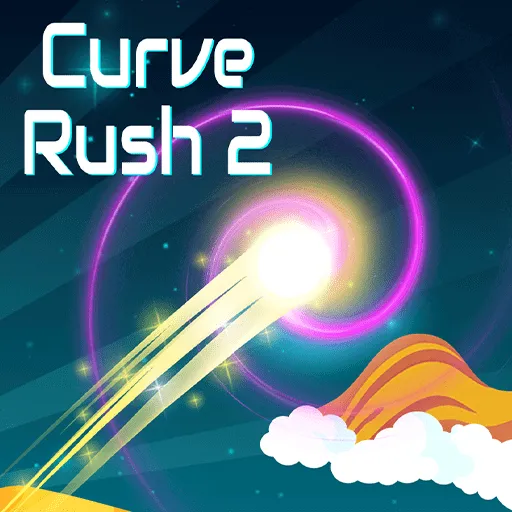
Curve Rush 2 is the follow-up to a very specific kind of browser break: a rolling ball, soft dunes, and a scoring loop that cares less about how fancy you look on the first hop and more about how long you can stay in rhythm. Gravity does most of the talking—steep descents add speed, climbs siphon it away, and the gap between a boring hop and a brilliant one is usually a half-second of patience. The sequel does not try to turn that idea inside out. It keeps the same heartbeat, then widens the toy box so long sessions stay interesting: fresh backdrops, trickier read patterns along the run, a broader roster of spheres, and a reason to return beyond “let me get five meters farther.”
On paper the goal is distance and a score that tracks how boldly you are managing momentum. In practice, Curve Rush 2 is a small lesson in flow: hold when you need to let the hill do its job, let go when you need air, and land with enough composure to carry the next section instead of wobbling into a faceplant. You will often earn extra credit for keeping the ball high enough that it clears a clean visual horizon band—treat that moment as a timing reward, not a side quest you can farm without caring about the landing. One sloppy touchdown still ends a lot of builds the old-fashioned way: a hard stop and a full restart.
Between attempts, a light economy turns scattered pickups into forward motion in the menu. Gold tokens appear along the ride; bank them, then plow the balance into new balls that change the look—and sometimes the feel—of a run, plus alternate environments that remix obstacles so you are not always solving the same dune. None of that replaces core skill: the ball still only moves well when you stop fighting the curve. Curve Rush 2 is friendliest when you treat the unlock path as a gallery walk between serious tries at a personal best, not a grind that excuses sloppy feet on the first hill.
Below, this guide walks through a tight control map (including Space and a primary click where the build allows), three step-by-step habits, longer notes on what the sequel actually adds, and a FAQ aimed at the questions people usually ask in the first ten minutes. Load the player on Drift Boss Unblocked when you are ready—then treat each run as a single, honest test of whether you are still listening to the slope, or just hoping the ball forgives you.
How to Play Curve Rush 2
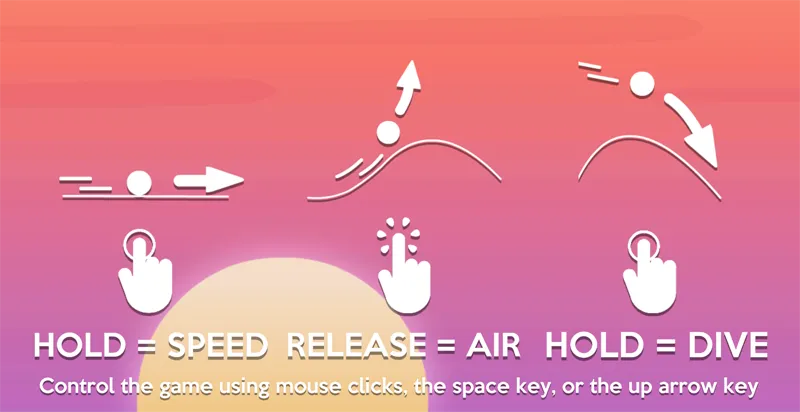
1. Re-learn the “hold, release, land” language of Curve Rush 2
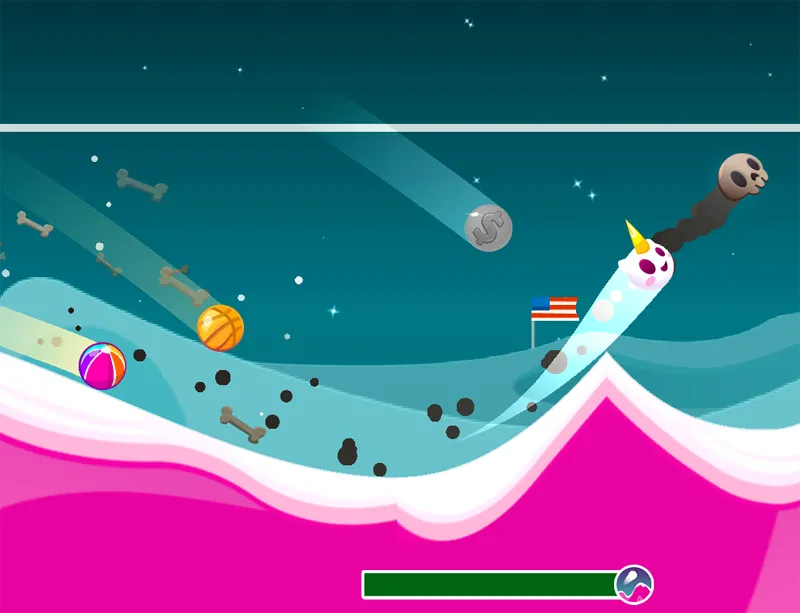
2. Score with height and flow, not with random airtime in Curve Rush 2
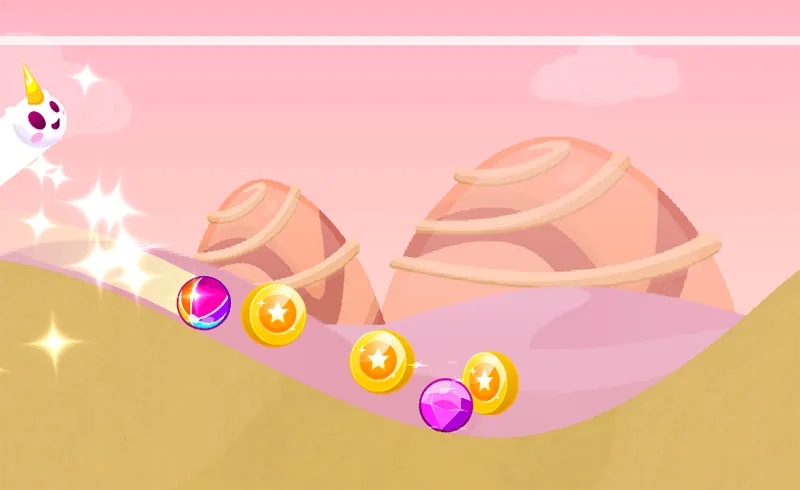
3. Collect coins, unlock variety, and read the new map wrinkles in Curve Rush 2
What the sequel actually changes for everyday runs
Sequels in the endless-runner space can either drown a clean idea in noise or, more rarely, add just enough variety that your hundredth run still asks for attention. Curve Rush 2 leans in the second direction. The dune language is the same, but the journey between crests is less monotonous: the scenery can shift in longer arcs so a session does not look like a single stock texture on repeat, and the layout mix gains extra obstacles and small terrain gimmicks that force you to re-check your timing instead of running on a memorized string of hops. That is not a difficulty spike for its own sake—it is a reason to look up the hill again even when you think you already “know the map.”
Ball variety matters more in a game where you mostly watch a sphere than in a car title where a dash tells a story. When Curve Rush 2 offers distinct categories of balls—including rarer or themed picks—the idea is a gentle shift in how you read motion at speed, not a list of pay-to-win stats. A frosted-looking trail, a more aggressive silhouette, or a brighter read on spin can be enough to break a plateau because it changes feedback, not because it promises free meters. The honest skill transfer from the first title still applies: the hill is the teacher; the skin is an outfit you wear while you listen.
Economy, unlocks, and when to care about the menu at all
Gold scattered along a run is the quiet reward for staying alive long enough to see it. The loop is simple—pick up, bank, open the wardrobe of balls and backdrops, repeat—but the best use of the economy is psychological. A new environment is a new pattern library; a new ball is a new visual metronome. The trap is to chase cosmetics after every bad landing and blame the next death on a paint job. Use the shop when you are curious or when a session starts to feel samey, then park yourself on one look for a while when you are dialling in fundamentals again.
If a particular unlock promises a quirk, read it as a soft modifier. The core rule does not change: a heavy landing, a shallow jump when you needed height, and a late release off the wrong dune are still the usual villains. Curve Rush 2 is most satisfying when the economy feels like a museum between attempts, not a second game that distracts you from the first one.
Performance, focus, and the honest limits of a browser build
Because the action is 3D and the camera rides close to a fast object, a steady frame is part of the difficulty. If the tab is choking, you will read crests late and you will accuse the ball of “random” physics. Close heavy background work, let the first load finish, and favor a clean window for serious tries. On touch devices, a build may or may not translate the same hold and release; when it does, treat a thumb like a calmer version of a mouse, not a drumroll.
Sound and motion together are half the read in Curve Rush 2: the slope tells you when a launch is about to be cheap or glorious. Wearing headphones on a quiet machine, or at least a speaker that is not sputtering, makes it easier to notice when the rhythm is slipping before the score does. The goal is not a competitive setup; it is enough clarity that every failure is clearly your timing, not the browser stalling.
Other momentum games to try on this site
If you like the dune language here and want a very different but still “one more try” object, the Eggy Car page on Drift Boss Unblocked pushes balance over big air, and it rewards the same small corrections that keep a long combo alive. If you are more in the mood for 3D driving after a long stretch with a sphere, Crazy Drift is a good contrast: a keyboard-forward car, more inputs to map, and a very different read on how grip and timing meet. Curve Rush 2 is still the pick when you want a run measured in a handful of good launches rather than a whole lap of corners.
FAQs about Curve Rush 2
You can play Curve Rush 2 unblocked online on https://driftbossunblocked.com/games/curve-rush-2/.