

What's Electron Dash game?
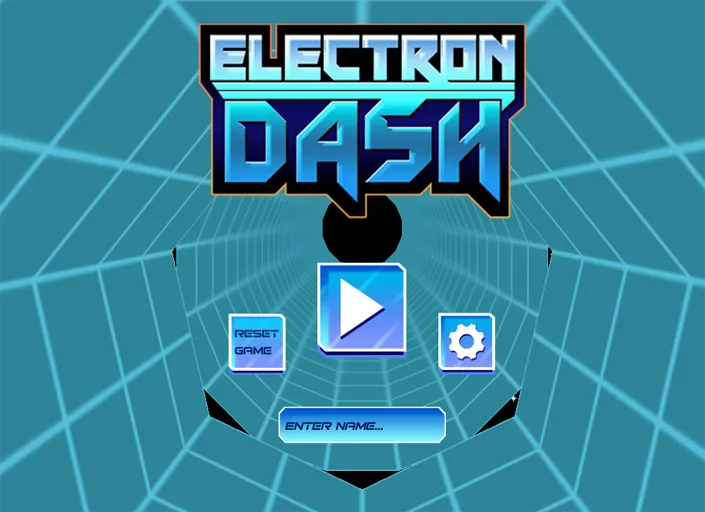
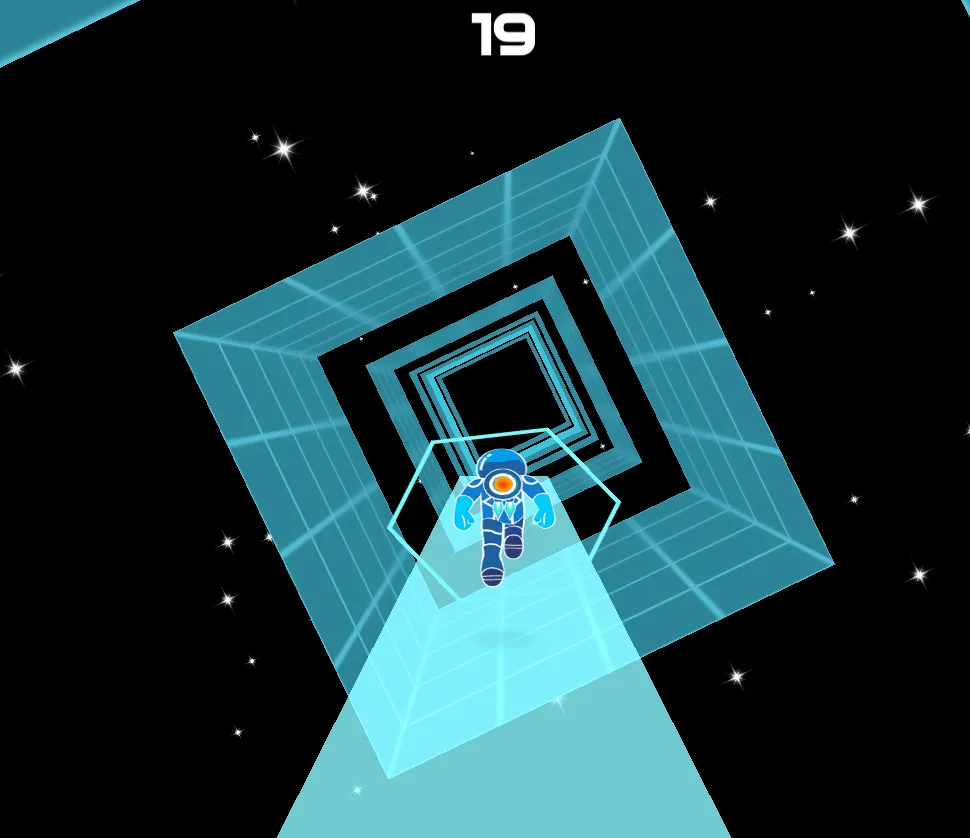
Electron Dash is a fast, readable, and surprisingly technical tunnel runner built around one promise: the farther you go, the less room you get for lazy movement. You control an astronaut sprinting through a glowing cylindrical track in space. At first glance, it looks simple - keep moving, avoid danger, survive. After a few runs, you realize the game is really about lane discipline, jump timing, and calm decision making at rising speed. One delayed move can send you into a red barrier or through a hole in the floor, and the run is over instantly.
The control scheme stays beginner-friendly, but the route design keeps it interesting. You move left and right around the tube with A/D or the arrow keys, and jump with W, ↑, or Space. That is it. The challenge comes from how those basic actions combine under pressure: narrow lanes after blind turns, collapsing light-blue segments that disappear under your feet, and obstacle clusters that force both jump and lateral correction in a single beat. electron dash is at its best when you stop reacting to the tile directly in front of you and start reading two moves ahead.
Visually, the game leans into bright turquoise geometry against deep-space backdrops. That contrast is not only aesthetic; it helps you parse safe ground from danger at speed. Red hazards announce hard fail states, while fragile sections ask for confidence without over-committing. Some builds also include heart pickups, giving you a recovery buffer that can extend long attempts. Whether that safety net appears or not, the same core loop remains: survive longer, clean up your line choice, and build consistent distance instead of one lucky sprint.
On Drift Boss Unblocked, you can launch immediately from the embedded player and use the guide below to shorten your learning curve. We break the game into practical steps, add mid-level strategy notes, and answer common questions players ask after the first dozen runs. If you want an arcade runner that loads quickly but still rewards real skill development, Electron Dash is exactly that kind of session game.
How to Play Electron Dash
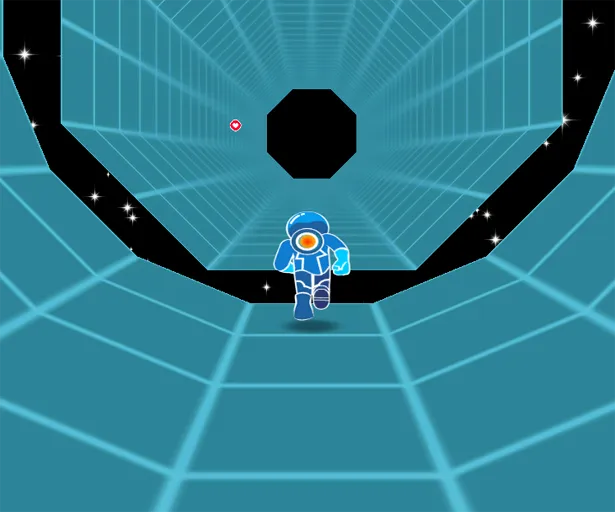
1. Learn the movement language before you chase big distance
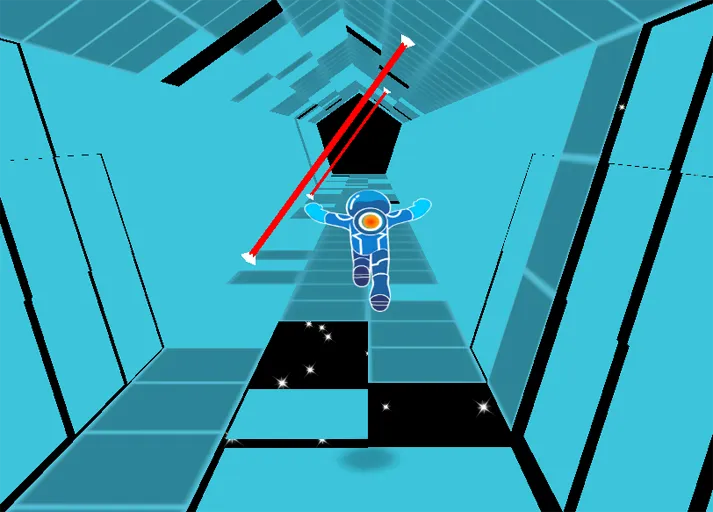
2. Prioritize safe surfaces and treat red zones as non-negotiable
3. Combine jumping and lateral control in one rhythm
What makes Electron Dash sticky after the first ten attempts
Many endless runners are fun for five minutes and then flatten out. Electron Dash avoids that by scaling pressure in ways you can feel. Speed increases are obvious, but the deeper difficulty comes from obstacle sequencing. A simple jump section can be followed by a rotating side shift and then a collapsing platform, forcing you to manage three decisions in less than two seconds. The game never adds a huge control list; it just asks more from the same keys.
This is why replay value stays high. Failure states are clear, restarts are immediate, and each loss usually has a specific reason you can fix. That loop creates real improvement instead of random luck. The game rewards composure under tempo, which is a skill that transfers to other arcade runners too.
Track language: stable tiles, collapsing tiles, and red gates
The tunnel uses color and shape as a fast UI. Stable surfaces are your default route. Bright light-blue or fragile-looking segments often indicate temporary support and should be crossed with intention, not loitered on. Red bars, beams, and blocks are direct run killers. Once you internalize this visual grammar, your reaction time improves because you stop evaluating every tile from scratch.
At higher pace, the game starts stacking these elements so you must decide under pressure: jump now and land on a risky tile, or move first and jump from a safer lane. There is no universal answer. The best players keep enough center margin to preserve options. In practical terms, that means avoiding unnecessary edge hugging unless the pattern absolutely requires it.
Common mistakes that cap score in electron dash
- Watching the avatar instead of the lane: if your eyes are too close, every obstacle feels late.
- Overcorrecting left-right: wide swings create new danger after you clear the original one.
- Jumping from bad geometry: late jumps from collapsing tiles often fail even with good timing.
- Ignoring center resets: after a save, many players stay off-center and lose on the next pattern.
- Tilting emotionally after one mistake: the game is long enough to recover mentally if you stay calm.
If you want adjacent challenge styles on this site
If this tunnel-run pacing clicks for you, the nearest rhythm cousin is Tap Road, where lane discipline under pressure carries the same mindset in a different visual skin. If you want to shift from astronaut movement to one-button car line control, Drift F1 keeps the same focus on timing and calm inputs. Each game emphasizes a different mechanic, but all reward anticipation over panic.
FAQs about Electron Dash
You can play Electron Dash unblocked online on https://driftbossunblocked.com/games/electron-dash/.