


What's Drift Boss Pumpkin game?
Drift Boss Pumpkin is a holiday-skinned take on the compact drift runner loop you might already know from the broader Drift Boss line: a vehicle keeps moving forward, and the entire skill test sits in a single, readable input—press to steer one way, release to steer the other, then micro-adjust as the next bend appears. The pitch here is not a complicated sim; it is momentum plus timing, dressed up in orange glow, a moonlit backroad mood, and a few playful nods to Halloween without turning the run into a tutorial slog.
Most sessions open with a short on-ramp so the steering language clicks before the pressure really climbs. The road itself tends to be narrow, sometimes suspended in a way that punishes a lazy hold, and the farther you go the less room you get for “almost” lines. Along the way you can usually scoop up pumpkins or similar pickups that feed unlocks, while optional boosters—think double score, a single safety net, or a focused coin window—add variety without replacing the need for clean corner exits. A leaderboard, where it is available, is less about raw aggression and more about who can string calm holds together when the next kink arrives a beat sooner than the last one.
Below, we break down practical controls, three habits that carry most players farther, a closer look at how the seasonal skin changes the feel (even when the core rules do not), and a straight FAQ. When you are ready, load the player above and treat each reset as a single, honest experiment: what did the corner ask for, and was your hand answering or guessing?
How to Play Drift Boss Pumpkin
1. Re-learn the one-button “see-saw” in a themed wrapper
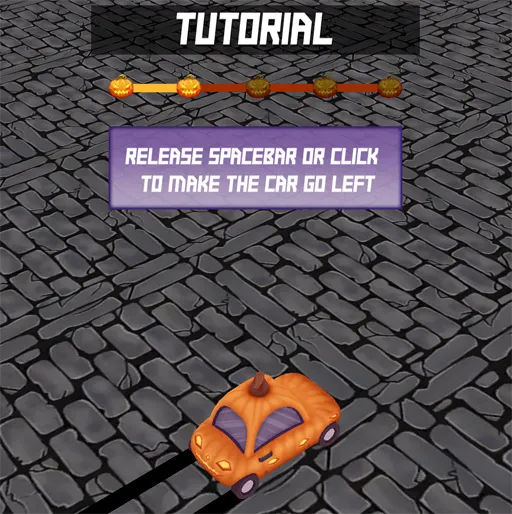
2. Read the bend before the car is already in it
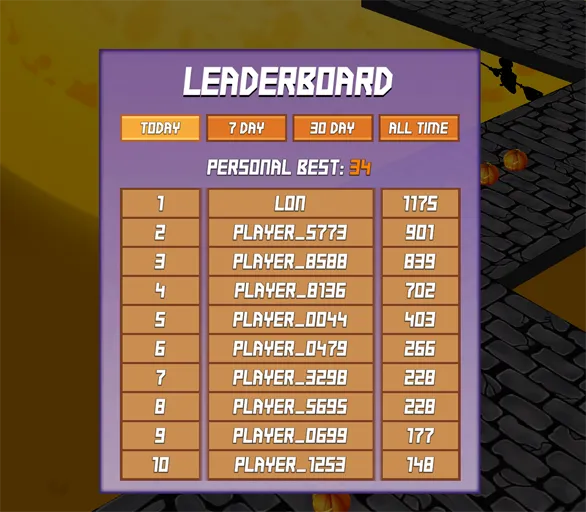
3. Use pickups and boosters as spice, not a substitute for fundamentals
If the build you are on exposes boosters like double score, a one-time protection-style assist, or a short coin burst, treat them as planning tools, not a patch for shaky timing. The seasonal pumpkins you collect are a satisfying meta loop—new looks or small power advantages—but the runs that look impressive on a leaderboard still come from cleaner exits, not from chasing upgrades before your basics are stable. Rotate through booster choices based on what you are practicing on a given day, not on what promises the biggest number in one lucky attempt.
What the Halloween theme actually changes in practice
Seasonal reskins that sit on top of a proven control scheme usually win or lose on clarity and atmosphere, not on brand-new subsystems. Drift Boss Pumpkin leans into low-light, autumn color, and a slightly uncanny track mood: orange highlights against darker surroundings, a sense of driving through a fun-sized haunted “runway” rather than a photoreal city loop. The audio and lighting choices often make edges read a little differently, which can nudge you toward earlier reads—treat that as a feature, not a gimmick, because the margin on floating roads is already thin.
Even when a description mentions a spooky night vibe or eerie set dressing, the mechanics underneath usually stay legible. You are still trying to keep the car attached to a ribbon of safe floor, still trading distance for the satisfaction of a single clean arc, and still learning from resets that are loud and immediate. The seasonal wrapper is a reason to come back in October; the skill curve is a reason to stay for “one more go” in November.
Field notes for calmer, longer runs
- Finish the turn before you chase score: a survived line with a modest number beats a glamorous angle that throws you a pixel wide.
- Respect the floating-road rule: if you would not bet your lunch on a hold, shorten it and try again on the next segment.
- Map boosters to goals: use score multipliers on runs where you already feel stable, not when you are debugging a wobble you cannot name yet.
- On touch devices, think “tap quality”: sticky glass or odd zoom can feel like a missed drift; reset your grip before you restart the run.
- Leaderboards reward consistency: a repeatable mid-distance often climbs faster than a single outlier that you cannot reproduce.
FAQs about Drift Boss Pumpkin
You can play Drift Boss Pumpkin unblocked online on https://driftbossunblocked.com/games/drift-boss-pumpkin/.
Most Drift Boss–style games use a single input axis: hold the left click, Space, or a touch to steer in one direction, and release to steer the other, with small adjustments in between. Exact key labels can vary by host, but the skill is always timing, not a long list of hotkeys—confirm in the in-game training tip if a specific build flips a direction.
Ignore guides that list full WASD driving for this kind of one-tap drifter; they are usually copy-paste noise from a different title.
In most cases, yes—the same in-browser play works on phones and tablets. Favor a clean, dry screen, disable accidental zoom, and use fullscreen when your browser offers it. Mobile taps are the same one-axis idea as click-and-hold—just be mindful of palm contact or low battery modes that stutter the frame.
Performance will vary with device class; if a run feels unfair, test again on a charger and with other tabs closed.